
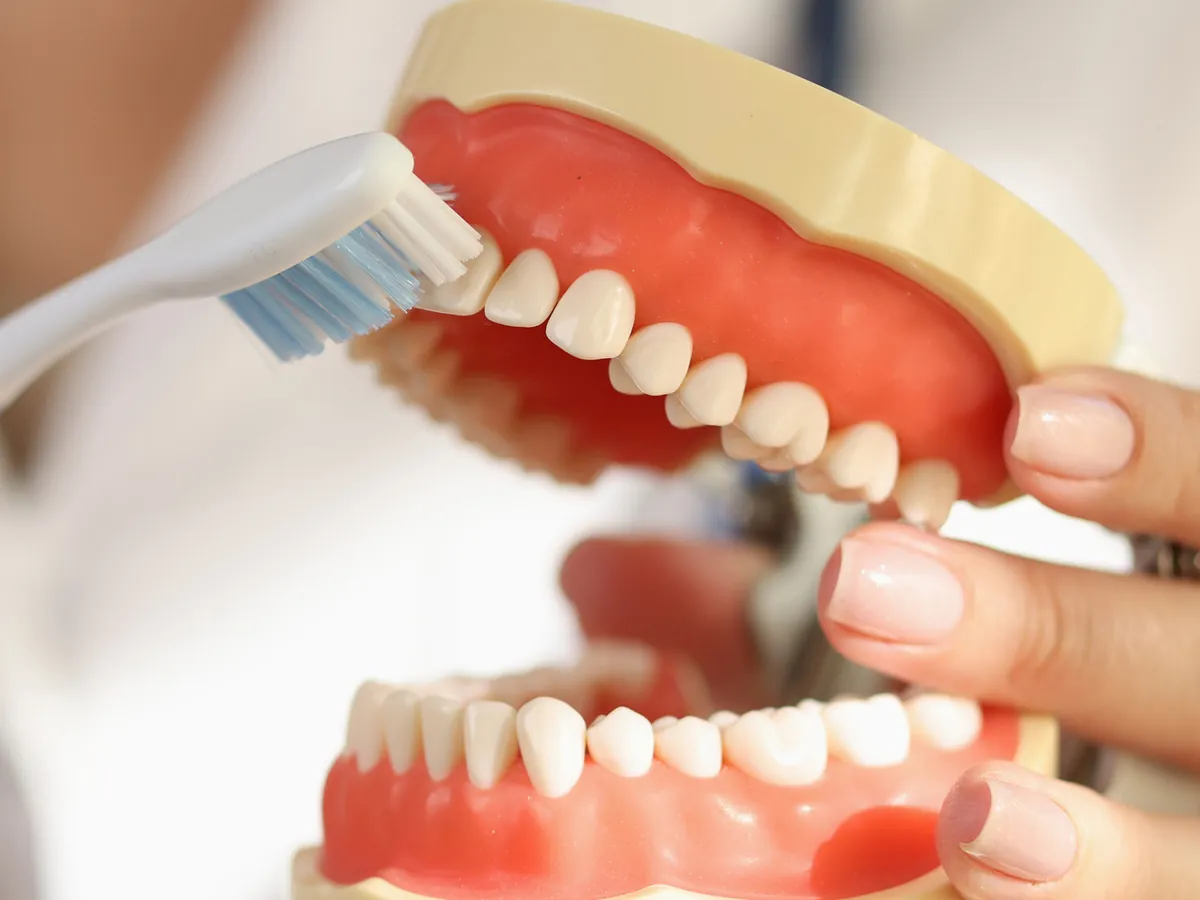
Gum disease is a chain of events that begins with plaque and ends, if nothing interrupts it, with the loss of the bone that holds teeth in place. Each link in the chain can be broken; the later it is broken, the more that has already been lost. This explainer walks through the stages so that the words on a treatment plan, gingivitis, periodontitis, pocket, bone loss, mean something.
Plaque, and what it does in the first days
Plaque is a film of bacteria that forms on teeth within hours of cleaning. Left for a day or two at the gum line, it provokes an immune response: the gum becomes slightly swollen and bleeds when brushed. This is gingivitis. It is fully reversible with cleaning, and most adults have it somewhere in their mouth at any given time.
From gingivitis to periodontitis
In some people, and in some sites, the inflammation does not stay at the surface. The attachment between gum and tooth breaks down and a pocket forms: a space below the gum line that a toothbrush cannot reach and that bacteria colonise. The body’s response to that deeper infection is what destroys bone: not the bacteria directly, but the inflammation they provoke. This is periodontitis, and the bone lost to it does not grow back on its own.
Why it does not hurt
Periodontitis is a slow, chronic inflammation rather than an acute infection. It rarely produces the sharp pain that sends people to a dentist, which is why it is commonly found at a check-up or when a tooth has already begun to move.
What each stage means for treatment
| Stage | What is found | What treatment aims to do |
|---|---|---|
| Gingivitis | Bleeding, no bone loss | Reverse it: professional clean, home care |
| Early periodontitis | Shallow pockets, slight bone loss | Stop it: scaling and root planing, maintenance |
| Moderate | Deeper pockets, clear bone loss | Stop it and stabilise teeth; some surgery |
| Advanced | Deep pockets, mobility | Save what can be saved; plan replacements where not |
Who is more at risk
Smoking, diabetes that is not well controlled, a family history, some medications and pregnancy all increase susceptibility. None of them makes treatment less worthwhile; they change how closely maintenance has to be kept.
What this means for implants
Because an implant sits in the same bone and is surrounded by the same gum, active gum disease is treated before an implant is placed, and the maintenance that protects natural teeth protects implants too.
Bleeding gums are assessed by examining the gum and measuring the bone beneath it. If you would like that looked at, you can request an appointment. The gum treatment page explains what the treatment itself involves.
 Dr. Aashish Pandit
BDS, MDS, Periodontology & Implantology · Periodontist & Oral Implantologist