
We explain what we recommend, and why, before any treatment begins. Our commitment to you
- 1Assessmentfirst visit
- 2Preparationbefore fitting
- 3Fittingone appointment
- 4Adjustmentsevery 4–8 weeks
- 5Finishinglast 1–3 visits
- 6Retainerslong term, with reviews
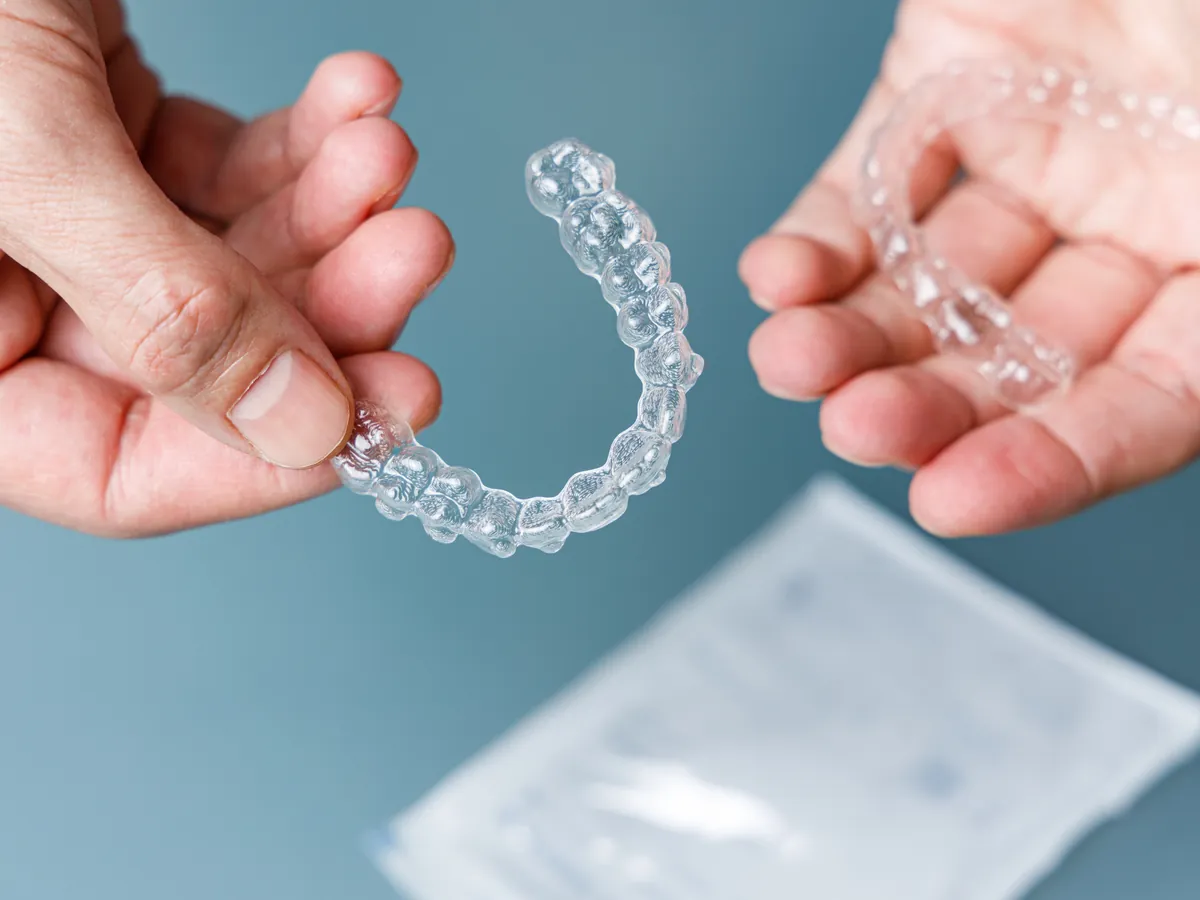
Braces and aligners move teeth into a better position over months, using either brackets and wires fixed to the teeth or a series of removable clear trays. Both are orthodontic treatment: planned from X-rays and a scan, and supervised at regular visits. Which suits you depends on what needs moving and how far, your age, the health of your gums, and how reliably a removable appliance would be worn.
Who it is for, and when it is considered
Crowded or overlapping teeth, gaps, a bite where the upper and lower teeth do not meet evenly, or teeth that have drifted after years of a missing tooth are the usual reasons. Children are assessed once the adult teeth begin to come through: around seven is a sensible first look, because a few problems are easier to guide early, and most are treated once the adult teeth are in. Adults can be treated at any age provided the gums and bone are healthy; a growing number of patients start in their thirties and forties.
What the assessment decides
The assessment is an examination with photographs, X-rays and impressions or a digital scan. From these the dentist can say what is actually out of place, whether the bite is involved, and how far the teeth need to move. That decides three things: whether fixed braces or clear aligners are appropriate for this case (some bite problems still do better with fixed braces; many mild to moderate crowding and spacing cases suit aligners), whether any teeth need treatment first, decay, gum inflammation, or occasionally a tooth that is in the way, and a realistic timeline. You leave with a written plan and an estimate before anything is agreed.
What happens, stage by stage
| Stage | What is done | Typical interval |
|---|---|---|
| Assessment | Examination, photographs, X-rays, scan or impressions; written plan | First visit |
| Preparation | Any cleaning, fillings or gum treatment needed first | Before fitting |
| Fitting | Brackets bonded and the first wire placed, or the first set of aligners issued | One appointment |
| Adjustment | Wires changed and progress checked; or the next aligners issued and fit checked | Every 4–8 weeks |
| Finishing | Fine positioning; braces removed or final aligners worn | Last 1–3 visits |
| Retention | Retainers fitted: removable, fixed behind the teeth, or both | Long term, with reviews |
Most courses run between twelve and twenty-four months. The plan you receive carries the dentist’s own estimate for your case; simpler movements take less.
What it involves for you
Fixed braces are tightened at each visit and the teeth ache for a day or two afterwards; the inside of the lips takes a week or so to get used to the brackets. Cleaning takes longer and matters more, because plaque collects around brackets. Aligners are worn around twenty to twenty-two hours a day, taken out to eat or to drink anything other than water, and cleaned before they go back in: the result depends on wear, so they suit people who will be disciplined about it. Either way, retainers afterwards are part of the treatment, not an optional extra: teeth drift back without them, and a fixed retainer or nightly removable one is usually kept for years.
The alternatives
For a single crooked or chipped front tooth, bonding or a veneer can sometimes disguise the position without moving it: quicker, but it removes or covers tooth rather than correcting the cause, and it does not help the bite. Doing nothing is reasonable where the teeth are stable, cleanable and the bite is comfortable; crowding is not a health problem in itself unless it stops you cleaning between teeth. Aligners bought online without an examination skip the step that finds decay, gum problems and bite issues: that is the step the dentist would not recommend skipping.
Questions people ask
Am I too old for braces? No. Adult teeth move more slowly than a teenager’s, but they move. The condition of the gums and bone is what matters.
Will aligners work for me? Only an assessment can say; the question is how far and in which direction the teeth need to move. Some cases are better with fixed braces for part of the treatment.
Can I take the braces off for a wedding? Fixed braces no; the timing of the whole course can sometimes be planned around a date if there is enough notice. Aligners can be left out for a few hours for an occasion.
Cost
Depends on the appliance (fixed metal, ceramic or clear aligners), the complexity of the movement and the length of the course. Retainers are included in the plan. Your written estimate follows the assessment.
 Dr. Preeti Kaushik
BDS · Dental Surgeon · Senior Associate Dentist