
For your mouth and your circumstances, never from a template. Our commitment to you
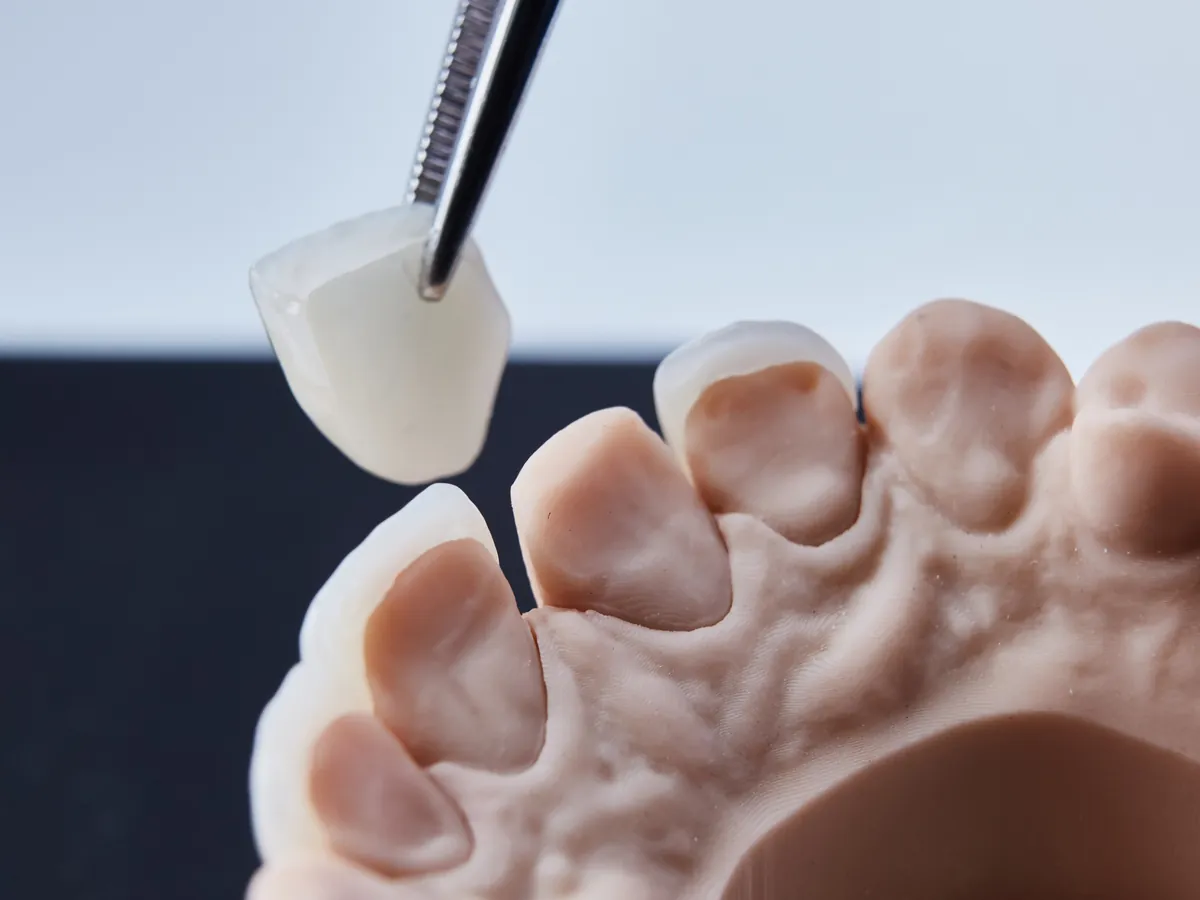
Composite bonding builds up or reshapes a front tooth with tooth-coloured resin applied directly and shaped in the chair. A veneer is a thin shell of ceramic made in a laboratory and bonded to the front of the tooth. Both change the shape, colour or outline of front teeth; they differ in how much tooth is prepared, how long they last, how they are repaired, and cost. The right one, and whether either is needed at all, is decided by examination, not by photograph.
Who it is for, and when it is considered
A chipped corner, a worn or short edge, a small gap, a tooth that is slightly out of line, or a mark or discolouration that whitening does not change. Bonding is usually the first choice for small chips and gaps because it removes little or no tooth and can be adjusted or repaired. Veneers are considered where several teeth are involved, where the change in colour or shape is larger, or where bonding would be too bulky or would stain. Teeth with active decay, gum inflammation or a heavy grinding habit are treated or stabilised first.
What the assessment decides
The examination looks at the teeth, the bite, because an edge that is being worn by the opposing teeth will wear bonding too, the gum line, and the colour of the teeth around the one in question. Photographs and sometimes a mock-up in the mouth show what the change would look like before anything is done. From that the dentist can say whether the problem is best solved by bonding, by a veneer, by whitening first, by orthodontics for a tooth that is actually out of position, or by leaving well alone. The plan says how much tooth would be removed, which is the question people most want answered; you leave with it in writing, with an estimate.
What happens, stage by stage
| Stage | What is done | Typical interval |
|---|---|---|
| Assessment | Examination, photographs, bite check; mock-up where helpful; written plan | First visit |
| Preparation | Whitening, cleaning or any treatment needed first | Before the cosmetic work |
| Bonding | Tooth surface prepared; resin applied, shaped, hardened with light and polished | Usually one appointment, no anaesthetic for small repairs |
| Veneers: shaping | A thin layer of enamel removed (sometimes none); impression or scan; temporary veneers fitted | One appointment |
| Veneers: laboratory | Ceramic veneers made to the impression | One to two weeks |
| Veneers: fitting | Try-in for shape and shade; bonded in place; bite checked | One appointment |
| Review | Checked at routine check-ups; polished as needed | Ongoing |
What it involves for you
Bonding is quick and usually painless, and can be polished or added to later; it picks up stain over the years and chips more easily than ceramic, so biting nails or opening packets with the teeth shortens its life. Veneers are more durable and hold their colour, but preparing the tooth is a one-way step: a veneered tooth will always need a veneer. Both are cleaned like natural teeth, and a night guard is recommended for anyone who grinds.
The alternatives
Whitening alone solves many colour concerns and is done first in any case, because bonding and ceramic do not whiten afterwards. Braces or aligners correct a tooth that is out of position rather than disguising it, which keeps the tooth intact: slower, but the cause is treated. A crown is the answer where too little tooth remains for a veneer. Doing nothing is a perfectly good choice: these are matters of appearance, not health, and no dentist should press them.
Questions people ask
How much tooth is removed for a veneer? Often less than half a millimetre of enamel, sometimes none; the plan states it for your teeth. Bonding usually removes none.
How long do they last? Bonding commonly five to seven years before repair or replacement; ceramic veneers commonly ten to fifteen. Grinding, nail-biting and smoking shorten both.
Can I have just one tooth done? Yes. Matching a single tooth to its neighbours is detailed work, which is why shade is judged in the mouth before anything is bonded.
Cost
Bonding is charged per tooth and is the less expensive option; veneers are charged per tooth and reflect the laboratory work. Whitening or other treatment needed first is itemised separately. Your written estimate follows the assessment.
 Dr. Preeti Kaushik
BDS · Dental Surgeon · Senior Associate Dentist