We explain what we recommend, and why, before any treatment begins. Our commitment to you
Teeth whitening lightens the natural shade of the teeth with a peroxide gel, either applied in the clinic or worn at home in custom-made trays. It is a dental procedure: the teeth and gums are examined first, because whitening does nothing for some kinds of discolouration and is not suitable for every mouth. Done properly, it is reversible, repeatable and conservative: no tooth is removed.
Who it is for, and when it is considered
Adults whose teeth have darkened or yellowed with age, tea, coffee or smoking, and whose teeth and gums are healthy. It is considered before any cosmetic work such as bonding or veneers, because those materials do not whiten and are matched to the shade the teeth will be. It is not offered during pregnancy or breastfeeding, to anyone under eighteen, or on teeth with untreated decay or gum inflammation.
What the assessment decides
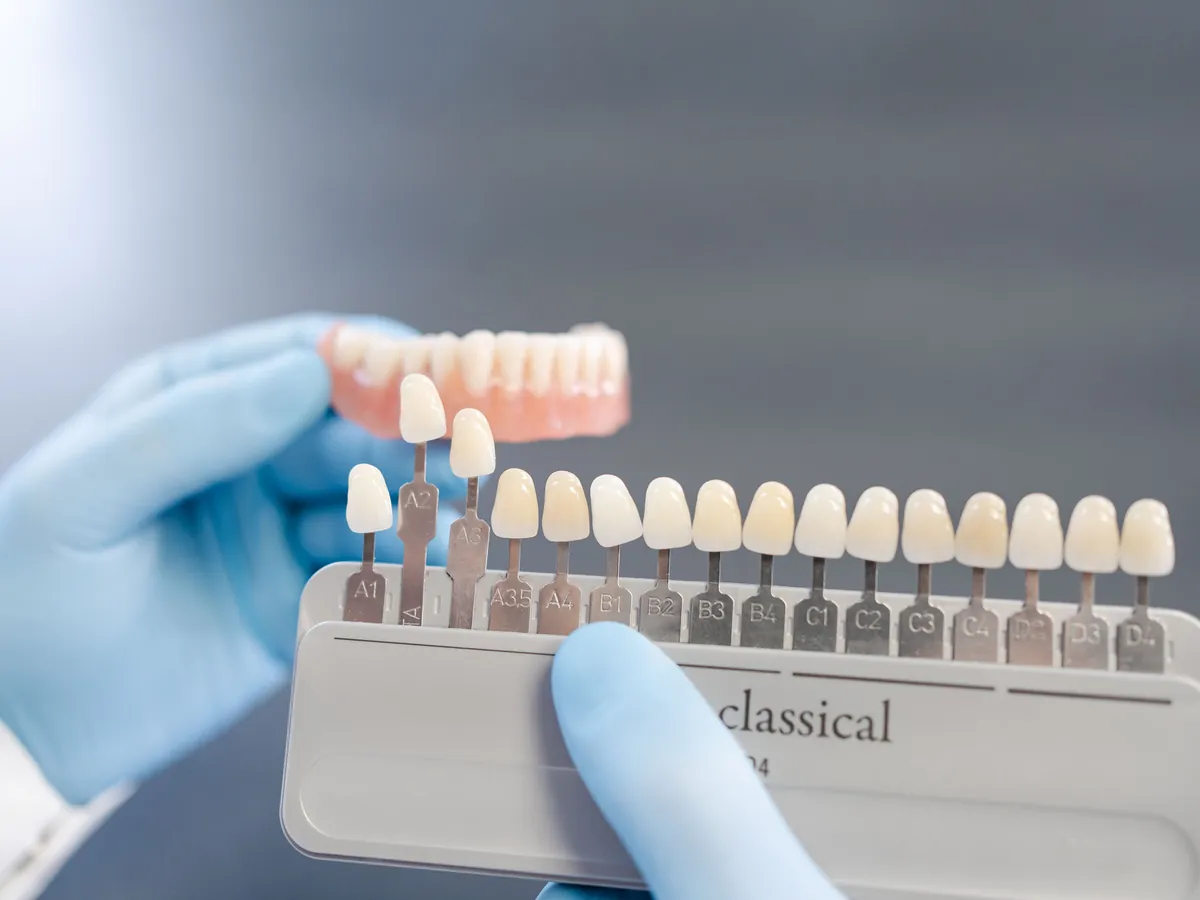
The examination records the current shade and looks for the things whitening cannot help or can make worse: fillings, crowns and veneers on front teeth (which stay their colour), a single tooth that has darkened because its nerve has died (which needs a different treatment), white or brown marks in the enamel, exposed roots, decay, and gums that would be irritated by gel. From that the dentist can say what change is realistic for your teeth, some shades of grey lighten less than yellow, and whether in-clinic, home, or a combination suits you. You leave knowing what to expect, not a promised shade.
What happens, stage by stage
| Stage | What is done | Typical interval |
|---|---|---|
| Assessment | Examination, shade recorded, any cleaning or fillings needed first | First visit |
| Impressions | For home whitening: impressions or a scan for custom trays | Same or next visit |
| In-clinic session | Gums protected; gel applied to the teeth in timed cycles | One appointment, about an hour |
| Home course | Gel worn in the trays for a set time daily, usually for two to three weeks | At home |
| Review | Shade re-recorded; sensitivity checked | After the course |
| Top-up | A few days of home gel when the shade drifts | Typically every one to two years |
What it involves for you
Temporary sensitivity to cold during and shortly after the course is the most common side effect; it settles, and a sensitivity toothpaste before and during the course helps. The gums can tingle if gel reaches them. For the first day or two after whitening the teeth pick up stain more easily, so tea, coffee, red wine and turmeric-heavy food are best avoided. The shade settles over the following week.
The alternatives
A professional clean and polish removes surface stain and is sometimes all that was needed: it is done first in any case. Bonding or veneers change colour by covering the tooth rather than lightening it, and are the answer for marks or a single dark tooth that whitening will not shift; they are a bigger step. Over-the-counter strips and kits use weaker gel without a fitted tray, and without the examination that spots the fillings and the dead tooth. Leaving the teeth as they are is entirely reasonable: natural teeth are not white, and the shade of healthy teeth is a matter of preference, not health.
Questions people ask
How white will my teeth go? It depends on the starting shade and the cause of the colour. The dentist will give an honest range after examining you; nobody can promise a shade in advance.
Does it damage the enamel? Professional whitening under supervision, at the concentrations used in the clinic, does not. Overuse of strong gels bought online can.
How long does it last? Usually one to three years before a short top-up course, depending on diet and smoking. The custom trays are kept for that.
Can I whiten before my wedding? Yes, with notice: the teeth are examined first, any cleaning or fillings done, and the course finished a couple of weeks before the date so the shade has settled. Last-week whitening is not recommended.
Cost
Depends on whether in-clinic, home or both, and on any cleaning or fillings needed first. Custom trays are kept for top-ups, which cost less than the first course. Your written estimate follows the assessment.
 Dr. Preeti Kaushik
BDS · Dental Surgeon · Senior Associate Dentist