
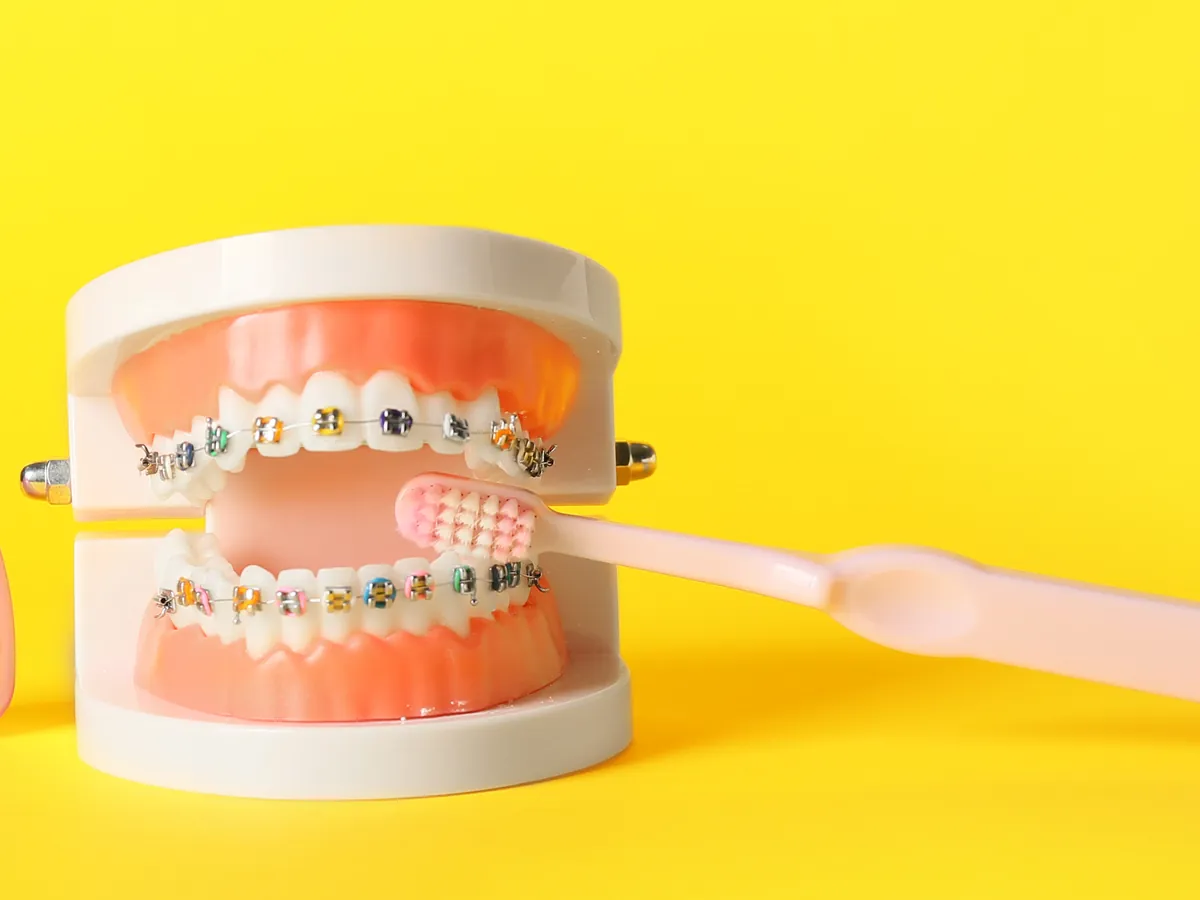
The decision to straighten teeth is made in the clinic; living with the decision happens at home, at school and at work, for months. Most people settle into it within a fortnight. Here is what that fortnight is like, and the habits that make the rest of the course run on time.
The first few days
With fixed braces, teeth ache for two to four days after fitting and after each adjustment: a dull, pressure ache rather than a sharp one, worst when biting. Soft food and an ordinary painkiller get most people through it. The inside of the lips and cheeks take a week or so to toughen against the brackets; a pea of orthodontic wax pressed over any bracket that rubs solves it in the meantime. With aligners, the first tray and each new one feel tight for a day or two; that tightness is the tray working.
Eating
With fixed braces the rule is nothing hard, sticky or that needs biting into: no nuts, hard rotis torn with the teeth, popcorn, toffee, chewing gum, or biting an apple whole. Cut things small and chew with the back teeth. A broken bracket costs an extra visit and a week or two of progress. With aligners the rule is simpler and stricter: trays out for anything other than water, teeth cleaned before they go back in, and the trays back in promptly: they only work when worn, around twenty to twenty-two hours a day.
Cleaning
Brackets collect plaque, and plaque around brackets leaves pale marks on the enamel that outlast the braces. Brush after every meal if you can, angling the brush above and below the brackets, and use an interdental brush between the wire and the tooth once a day. Fluoride toothpaste, and a fluoride mouthwash at night. Aligner wearers clean the trays with a soft brush and cool water, never hot, and never with toothpaste, which scratches them.
Speech, sport and photographs
Speech is slightly different for a few days with either appliance and then normal. For contact sport a mouthguard is fitted over fixed braces; aligners are taken out. Photographs are a matter of preference: ceramic brackets and clear aligners are both less visible, and the plan says which suits the case.
Keeping to schedule
Adjustment visits every four to eight weeks, trays changed on the day the plan says, elastics worn as instructed, and a call rather than a wait if a bracket breaks or a tray cracks. Most courses that run late do so for one of those reasons. And after the last wire or the last tray come the retainers, fixed behind the teeth, removable at night, or both, which are the part of treatment that keeps the result.
The braces and aligners page explains how treatment is planned and what the assessment decides.
 Dr. Preeti Kaushik
BDS · Dental Surgeon · Senior Associate Dentist