
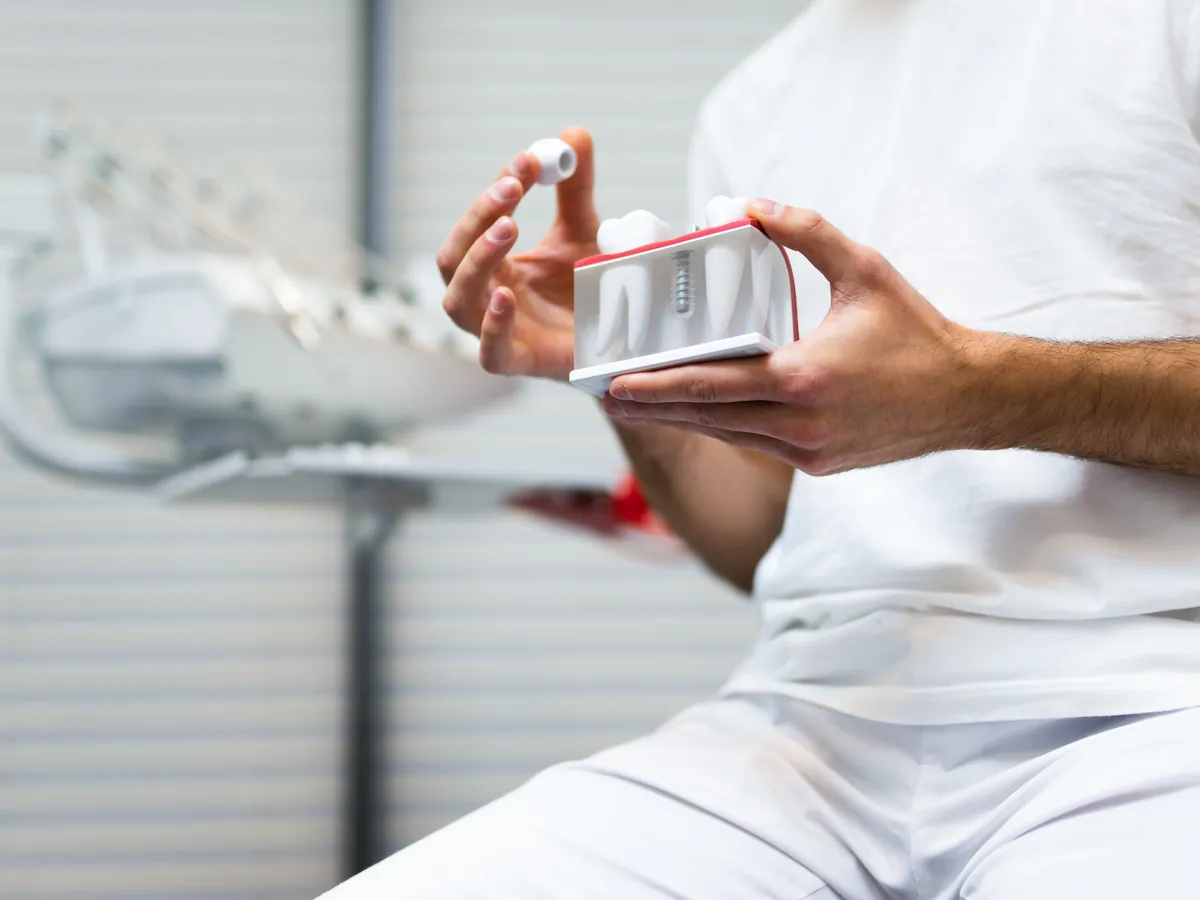
An implant that has become loose, painful, or has gum that bleeds and swells around it has one of two problems: it never integrated with the bone, or it integrated and has since developed peri-implantitis: infection of the bone around it. The first shows within months of placement; the second can appear years later. Neither is something to watch and wait on.
What it is not
Looseness is often not the implant at all but the crown or the screw that holds it: a far simpler repair. That is the first thing an examination rules in or out.
The honest range of outcomes
Early peri-implantitis can be treated, much like gum disease, and the implant kept. Advanced bone loss around an implant usually means removal, a period of healing, often a bone graft, and a new implant later, or a different restoration altogether. A dentist who tells you every failing implant can be saved is not telling you the whole story.
Who should see it first
If the implant was placed recently and the dentist who placed it is reachable, they should see it first: they have the records, the implant system details and the responsibility for it. If that is not practical, bring whatever records you have: the implant brand and size if known, and any X-rays.
What the assessment involves here
An examination, pocket measurement around the implant, an X-ray and often a CBCT scan to see the bone in three dimensions. You are told plainly which of the outcomes above applies, with a written plan.
 Dr. Aashish Pandit
BDS, MDS, Periodontology & Implantology · Periodontist & Oral Implantologist