
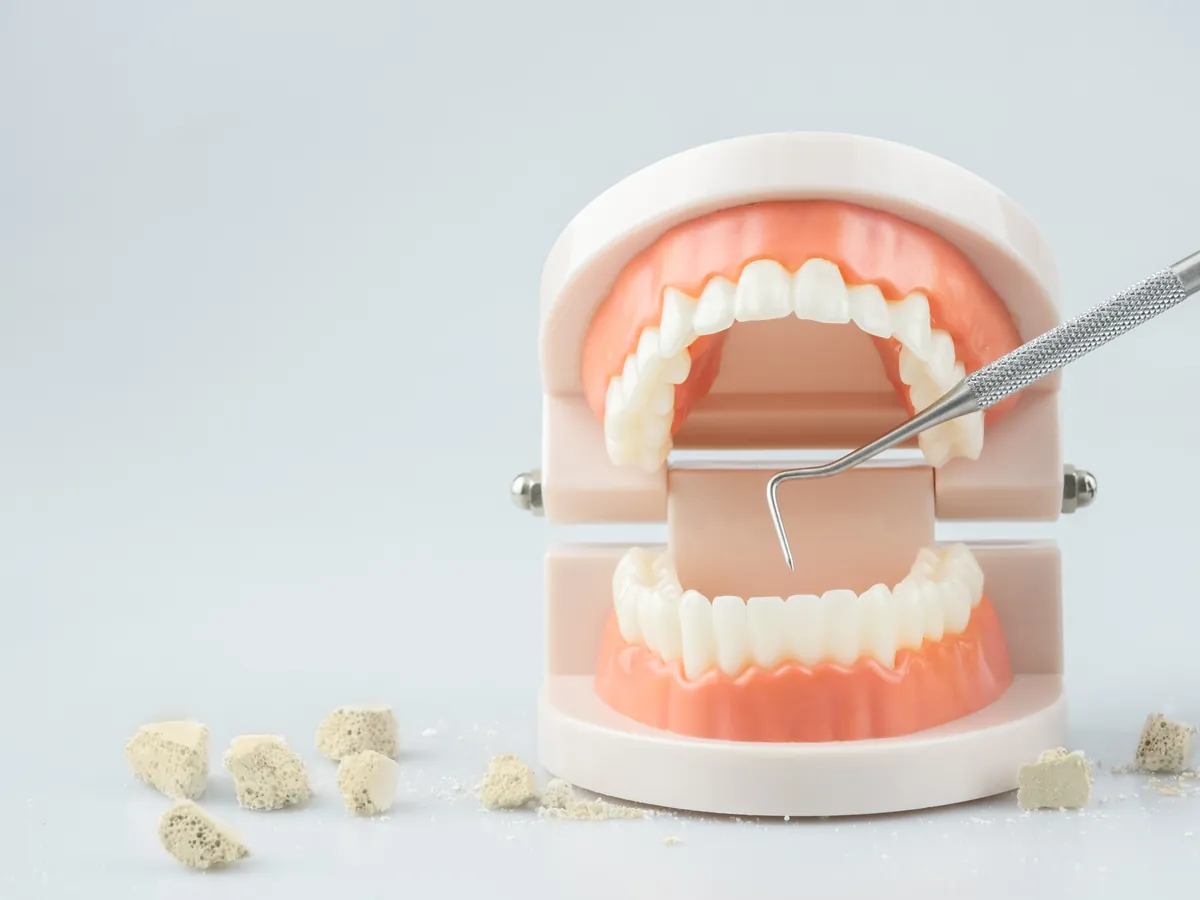
Gums that have pulled back from the teeth, gaps opening at the gum line, and teeth that move slightly under the tongue or when biting are the common signs of periodontal disease that has reached the bone. It is usually painless, which is why it is often noticed late.
What can be done
Teeth with moderate bone loss can be stabilised with treatment and maintained for many years. Teeth with severe loss may need splinting or, where they cannot be saved, planned removal with a replacement discussed in advance rather than in an emergency. Recession on otherwise healthy gums, from hard brushing, for example, is a different problem with different options, including grafting to cover exposed roots.
What the assessment measures
Pocket depths at six points around every tooth, mobility, and bone levels on X-rays. The result is a tooth-by-tooth picture and a plan.
 Dr. Aashish Pandit
BDS, MDS, Periodontology & Implantology · Periodontist & Oral Implantologist