
For your mouth and your circumstances, never from a template. Our commitment to you
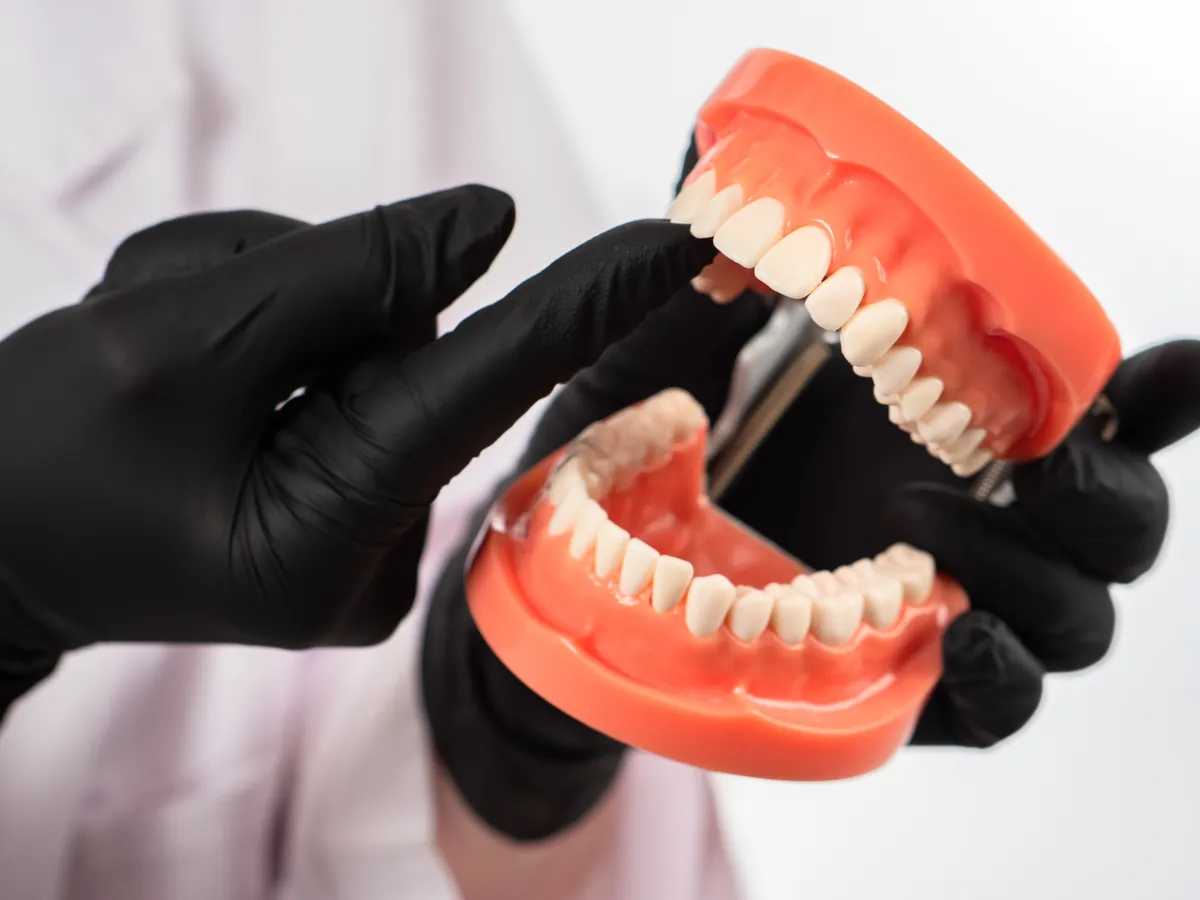
A denture replaces missing teeth with a removable appliance: a partial denture where some natural teeth remain, a full denture where none do. Modern acrylic and flexible designs are lighter and slimmer than most people expect, and a denture can be made far more stable by clipping it onto two or more implants. A well-made denture is a legitimate choice, not a last resort, and it is often the right first step before any decision about implants.
Who it is for, and when it is considered
Several missing teeth in one arch, a full arch with no teeth left, or a mouth where the remaining teeth are not sound enough to carry a bridge. Dentures suit people who want a solution without surgery, whose general health or bone makes implants unattractive, or who would rather see how they get on with a removable appliance before committing further. An existing denture that has become loose, cracked or uncomfortable after years of wear is usually relined or remade rather than endured.
What the assessment decides
The examination looks at the remaining teeth and gums, the shape and firmness of the ridge the denture will rest on, the bite, and how an existing denture fits. An X-ray shows the bone beneath. From that the dentist can say which design would serve: a partial denture on a metal or acrylic frame, a full denture, or an implant-retained denture where two or more implants hold it firmly in place. Where a few remaining teeth are beyond saving, the sequence: extractions, healing, then the denture, or an immediate denture fitted on the day of extraction: is explained with its trade-offs. You leave with a written plan and an estimate.
What happens, stage by stage
| Stage | What is done | Typical interval |
|---|---|---|
| Assessment | Examination, X-ray, written plan | First visit |
| Preparation | Any extractions, gum treatment or implant placement needed first | Before impressions |
| Impressions | First and then more precise impressions of the gums and remaining teeth | Two visits |
| Bite and try-in | The bite is recorded; the teeth are set in wax and tried in so shape, shade and fit can be judged and changed | One or two visits |
| Fit | The finished denture is fitted and checked | One visit |
| Adjustment | Sore spots eased as the mouth settles | One to three short visits in the first weeks |
| Review | Fit checked and the denture relined as the gums change | Yearly, or sooner if it loosens |
What it involves for you
The first days with a new denture are a learning period: speech feels different for a week or so, eating starts with soft food in small pieces, and one or two sore spots are normal and are quickly eased at an adjustment visit. A denture comes out at night, is cleaned with a brush rather than toothpaste, and is stored in water. The gums and any remaining teeth still need brushing; with a partial denture, the teeth it clips to need particular care because plaque collects around clasps.
The alternatives
Implants hold a denture firmly or replace it with a fixed bridge, at greater cost and with surgery and months of healing; the dental implants page sets out the staging. A bridge can replace one or a few teeth where the neighbouring teeth are strong enough to carry it. Leaving a gap is reasonable for a single back tooth that is not affecting chewing; for several teeth the remaining ones take more load and tend to drift, which makes later treatment more involved. Each option is presented without a preference; what suits you depends on bone, gums, general health and what you are comfortable maintaining, and the choice is yours.
Questions people ask
How long does a denture last? Typically five to ten years before the gums have changed enough that a reline or remake fits better. The teeth on the denture wear with use.
Will people be able to tell? Shade and shape are chosen with you at the try-in, and modern designs are slim. A denture that looks too perfect is the one people notice.
Can my old denture be fixed? Often: a loose denture can be relined, a cracked one repaired, a missing tooth added. Bring it to the assessment.
Cost
Depends on the design (acrylic partial, metal-framed partial, full denture or implant-retained), the number of teeth, and whether extractions or implants are needed first. Adjustments in the settling-in period are part of the fitting. Your written estimate follows the assessment.
 Dr. Aashish Pandit
BDS, MDS, Periodontology & Implantology · Periodontist & Oral Implantologist