
We explain what we recommend, and why, before any treatment begins. Our commitment to you
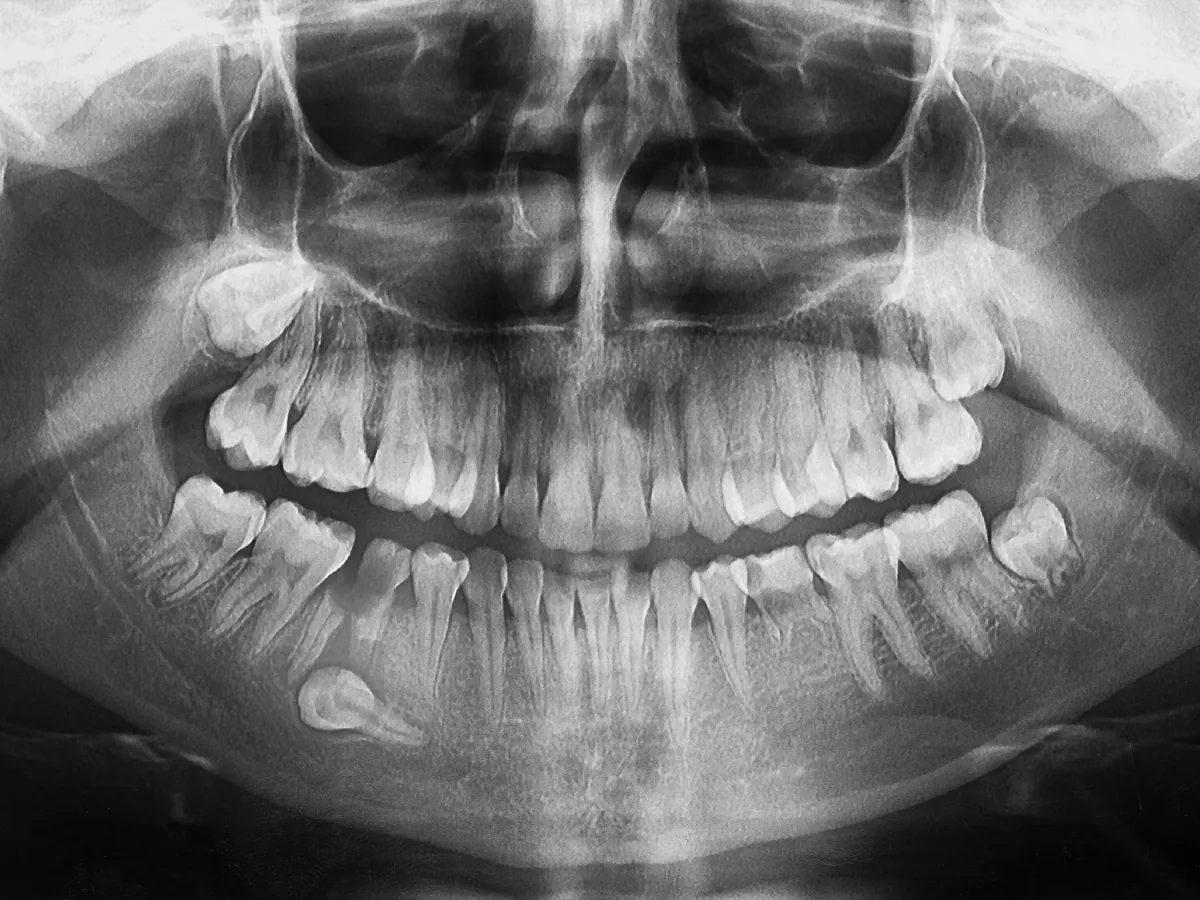
Wisdom teeth are the last molars, arriving between the late teens and the late twenties, and often without room. Some come through and are kept like any other tooth; some stay below the gum and never cause trouble; and some tilt, partly emerge or press on the tooth in front, and are removed. Removal is a planned procedure under local anaesthetic, and a wisdom tooth that is causing no problems is watched rather than taken out.
Who it is for, and when it is considered
Removal is considered when a partly emerged wisdom tooth keeps getting sore or infected under its gum flap, when decay has started in it or in the molar in front because the area cannot be cleaned, when it is damaging the neighbouring tooth, when a cyst has formed around it, or when it stands in the way of orthodontic or denture treatment. Pressure or mild ache as a tooth comes through is common and does not on its own mean removal.
What the assessment decides
A panoramic X-ray shows how each wisdom tooth is lying, how developed its roots are, and how close the lower ones sit to the nerve that runs through the jaw. Where the nerve is close, a three-dimensional scan may be advised before any decision. From that the dentist can say whether the tooth is likely to come through usefully, whether it should be removed, and how involved the removal would be: a simple extraction, or a surgical one where the gum is opened and the tooth divided. You leave with a written plan and an estimate, and with the reasons for watching rather than removing if that is the advice.
What happens, stage by stage
| Stage | What is done | Typical interval |
|---|---|---|
| Assessment | Examination, panoramic X-ray, written plan | First visit |
| Settling an infection | Cleaning under the gum flap and, where needed, a short course of medication before removal | Before the procedure, if required |
| Removal | Local anaesthetic; the tooth removed, with the gum opened and stitched where needed | One appointment, typically 20–60 minutes |
| First days | Rest, soft food, careful cleaning; medication as prescribed | 3–5 days |
| Review | Stitches checked or removed; healing confirmed | About a week later |
What it involves for you
The procedure itself is done numb; pressure is felt, pain should not be. Afterwards expect swelling that peaks around the second or third day, some stiffness opening the mouth, and discomfort managed with the painkillers prescribed. Soft food, no smoking, no rinsing hard on the first day, and gentle warm salt-water rinses from the next: the aim is to protect the blood clot in the socket, because losing it is what causes the delayed pain known as dry socket. Most people return to desk work within a day or two. Lower wisdom teeth close to the nerve carry a small risk of altered sensation in the lip or tongue, usually temporary; it is discussed before you decide.
The alternatives
Watching is the right choice for a wisdom tooth that is through, cleanable and causing no trouble, or one buried deep with no sign of disease; it is reviewed at check-ups. Treating the gum flap alone can settle an occasional sore episode and is reasonable where the tooth is expected to come through. Removing part of the tooth (a coronectomy) is sometimes advised for a lower tooth wrapped around the nerve. Removal is recommended when the problems are recurring or the neighbouring tooth is at risk, not as a routine for everyone.
Questions people ask
Do all wisdom teeth need to come out? No. Many never cause trouble and are left alone. The X-ray and the history decide.
Will I be asleep? Removal here is done under local anaesthetic, which numbs completely. If a case would be better managed under sedation or general anaesthetic, that is said plainly and arranged appropriately.
How long before I can eat normally? Soft food for a few days; most people are eating comfortably within a week.
Cost
Depends on whether the removal is simple or surgical, how many teeth are involved, and whether a scan is needed. Your written estimate follows the assessment.
 Dr. Aashish Pandit
BDS, MDS, Periodontology & Implantology · Periodontist & Oral Implantologist